Thuraya-WiCis Partnership Could Jumpstart Satellite-Enabled Wearables - Via Satellite - https://t.co/kUqvcjycnc — WiCis-Sports (@WiCisSports) June 10, 2016
Posts
Carlota - our Marketing Guru tests our solution...
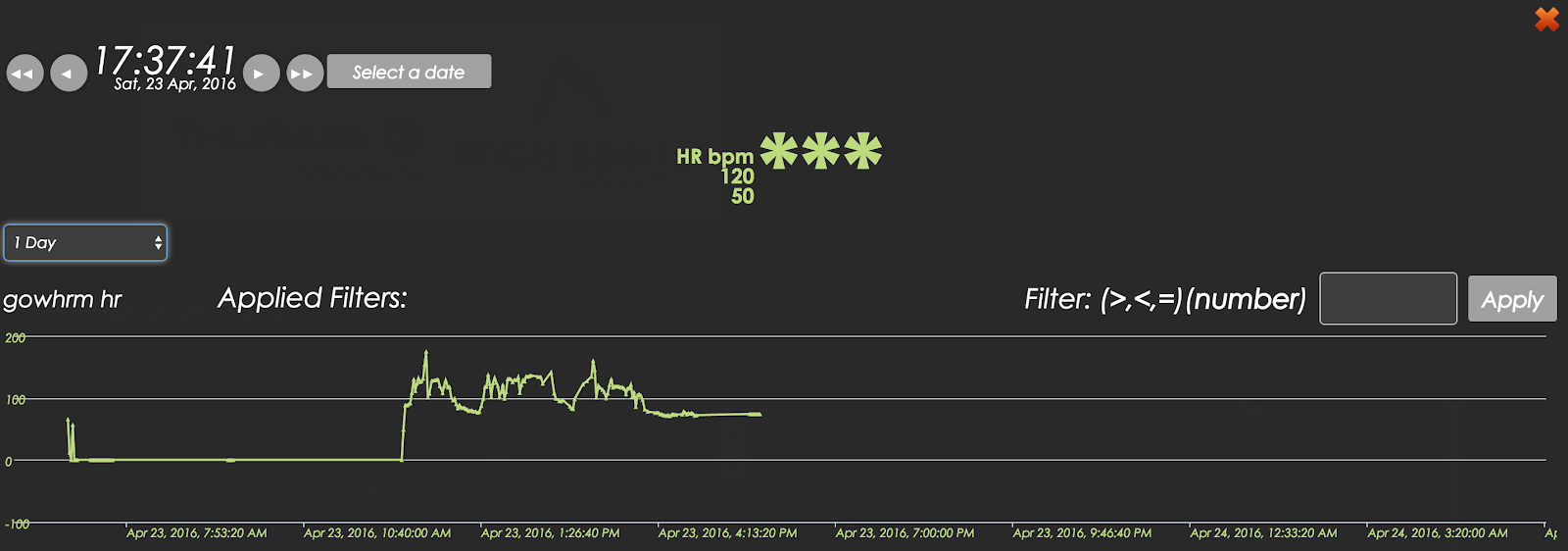
I hiked up to Mount Diablo today with our WiCis-Sports gear and app, and I loved it. It was so simple to connect my device with the app. In just 3 steps everything was working! Ease of Use Step 1 - Click: I attached the heart rate monitor to my shirt. Step 2 - Load: I started the Wicis App on my Samsung and loaded the heart monitor driver (the app can load drivers for very different devices). Step 3- Stream: Nothing do to - the app just started streaming data GPS and wearable data to the web (my personal public dashboard) in real time. I posted a video on twitter showing how easy this was. Comfort The shirt with the wearable was my base layer, and it was very comfortable - I didn't even notice that I was wearing it! The hike was beautiful, we climbed up to 3,500 feet, and there were two spots that were a big challenging for me: The first one, when I started, and the other when I almost reached the summit. What's interesting is that when I returned home I opened my ...
WiCis-Sports in the Himalayas
While we have tested extensively our system in the Sierra Nevada (Western United States), we have yet to take it to the Himalayas. We will begin streaming from Jomsom, Nepal on March 19th. Jomsom is at 9,000 feet, and is the entry point to many climbs in the Himalayas. From Jomsom, one can see the Dhaulagiri and Nilgiri peaks. You will be able to follow the participants' heart rate, ECG, respiratory rate and waveform, temperature, and intermittent pulse oximetry, along with geo-location, speed, altitude, and bearing, all live! That is, that from anywhere in the world with an internet connected device, you will lag only about 1 second behind real time. There are three links to follow. Adventurer 1 Adventurer 2 Adventurer 3 We will be tweeting as to whenever these are live. We plan to send live data some 4-6 hours per day, some while climbing, some at camp. Expect much new data for high altitude physiology enthusiasts! There is little data on live ECG at altitude f...
Is measuring Blood Pressure important at 24,000 feet?

I have often thought that much of what we end up measuring in the operating room is because we stumbled at one point in medicine on learning how to keep track of certain variables. In the past, EKG was king - that is until SpO2 came along. If I have to choose today between the two, I will go for oxygen saturation. But in fact, if I could really chose, I would much rather know the value for SvO2 (mixed venous saturation) which is a really good indicator of how much oxygen is being used in our cells, and therefore a great indicator of a healthy perfusion and cell metabolism. (Today we estimate a good perfusion practically by just taking somebody's blood pressure (BP). But we don't have the luxury of measuring this easily and certainly not routinely, so I follow what we know how to measure as long as it's practical. The same goes for BP at altitude. Can we measure it? Sure. (See the picture below). Is it practical? Probably not, since placing and or wearing a blood pressur...
What to monitor in a mountain climber at 24,000 feet and then stream his data to any device on the planet with a one second delay

A climber at 24,000 feet faces many challenges and for most of these he/she is completely unaware of their risks or of their possible outcome. In order to decrease these risks, one can monitor certain vital signs that will help us make better decisions up there. We have to decide what vital signs are useful to us, we have to be able to read them, and in real time, send them down to base camp or elsewhere in the world where somebody who is trained and is not hypoxic, can help us with the right decisions. Aviation has faced a similar dilemma, and the cockpit on the plane that flew you to Kathmandu or Lhasa has many instruments that have evolved over time to make aviation safer. Before your pilot takes off, he also has a weather briefing that is updated while in flight, to keep him informed of the big picture. The situation on the mountain is no different. Until recently, we were climbing with poor weather forecasts, and even today, a climber has few instruments to tell him of his r...
How to monitor somebody at Base Camp from afar by an Anesthesiologist

Anesthesiologists (anaesthetists in the UK) are doctors that spend much of their day looking at monitors whether in the operating room (theater) or intensive care unit, in order to make decisions about their patients. Doctors such as these are trained to monitor, interpret, and then make a decision for their patients very quickly. So it should be no surprise that the WiCis-Sports system was developed in conjunction with doctors from this specialty. What do the WiCis-Sports solutions share in common with what goes on in an opertaing room while you are having surgery? The answer is, just about everything ! Data that your doctor sees in the operating room is being read by sensors placed on the patient and displayed in real time for him to interpret it. What does an anesthesiologist do with this information? He keeps you alive - that is what these doctors really do. How do they do it? By measuring certain vital signs. Take a look at a closeup of the monitor on the top left...